
The Signature Stonework of Andrew Leopold Schlosser: Greensboro’s Master Mason and the Iconic John Marion Galloway House
If you’ve ever strolled through Greensboro’s charming Fisher Park Historic District and paused to admire a sturdy stone foundation, a whimsical arched bridge, or the textured granite veneer on a classic early-20th-century home, chances are you’ve encountered the enduring legacy of Andrew Leopold Schlosser. This Slovakian-born stonemason, who arrived in Greensboro around 1899, left an indelible mark on the city’s architecture with his distinctive random-coursed stonework accented by chocolate-brown mortar joints—often tooled into a raised, pointed, or beaded style that gives the masonry a rustic yet refined character.
Schlosser’s technique wasn’t just functional; it was artistic. Drawing from European traditions but adapted to local Mount Airy granite, his work featured irregular stones fitted in uneven rows, with the dark mortar providing striking contrast and emphasizing the handcrafted quality. This style became a hallmark of Greensboro’s upscale residences during the 1910s and 1920s, a period when the city was booming as a tobacco and textile center.
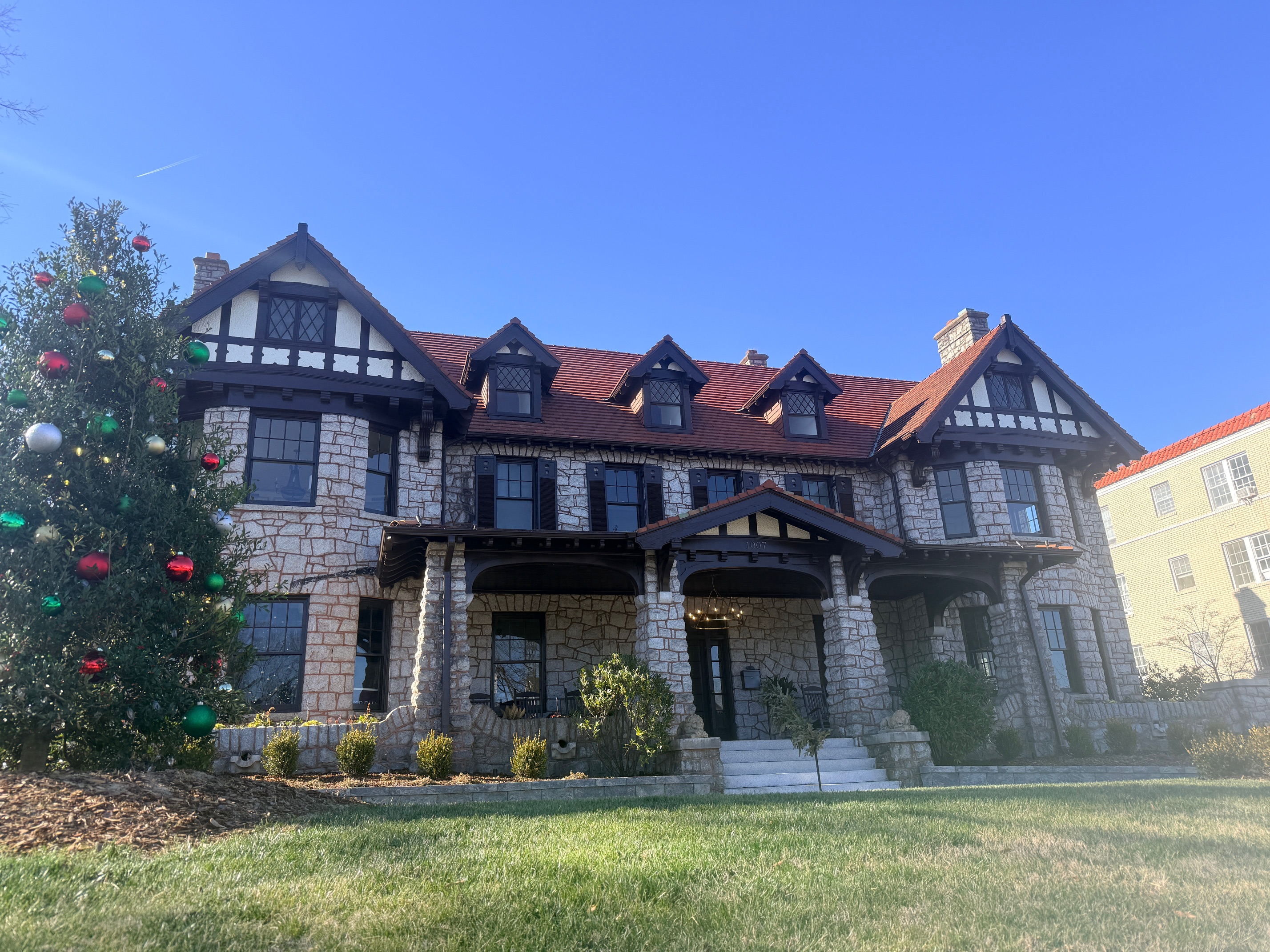
One of the finest examples is the John Marion Galloway House, completed in 1919. This eclectic Tudor Revival residence, with its half-timbered gables, red tile roof, and prominent stone elements, perfectly showcases Schlosser’s craftsmanship.

The house was commissioned by John Marion Galloway (1880-1922), a prominent tobacco grower from Rockingham County who reportedly became one of the world’s largest producers of bright leaf tobacco. After moving to Greensboro in 1919 with his wife, Margaret Terressa “Maggie” Greeson Galloway, the family settled into this impressive new home. Galloway’s success in the industry reflected Greensboro’s rise as a key player in North Carolina’s tobacco economy.
While the overall design is credited to renowned local architect Harry Barton—known for blending Tudor Revival with Craftsman and bungalow influences—the stonework itself was masterfully executed by Schlosser. This collaboration was typical of the era’s high-end projects: architects like Barton provided the vision, while skilled craftsmen like Schlosser brought the tactile, durable details to life. The result is a home with battered stone porch piers, a matching stone retaining wall, and that signature chocolate mortar that pops against the lighter granite.
The Galloway House was individually listed on the National Register of Historic Places in 1983 and later became part of the broader Fisher Park Historic District. Architectural historians, including those who prepared the National Register nominations, have praised Schlosser’s “fine stone work” and “remarkable stonework” as standout features.
Schlosser’s influence extends far beyond this one residence. He contributed to other notable projects in Fisher Park, including the Latham-Baker House (ca. 1913), whimsical features like the “King’s Chair” sculpture in the park itself, arched footbridges that resemble fairy-tale props, and many of the neighborhood’s graceful retaining walls. His own home also showcases his personal style.

Examples of similar Schlosser-influenced stone foundations and details in Greensboro bungalows and cottages:


These robust, random-coursed bases with visible, pointed mortar joints are a common sight in the district and evoke the Arts and Crafts movement’s emphasis on natural materials and honest craftsmanship.

Today, as Greensboro continues to celebrate its historic neighborhoods through tours, Preservation Greensboro events, and local landmark designations, Schlosser’s work remains a tangible link to the city’s early-20th-century golden age. His stones have weathered more than a century, standing as quiet testaments to a time when skilled hands shaped not just buildings, but the very character of a growing Southern city.
If you’re in the area, take a walk through Fisher Park—look closely at those stone details, and you’ll likely spot the unmistakable touch of Andrew Leopold Schlosser. History isn’t always in grand museums; sometimes it’s right there in the mortar and stone beneath your feet.
Where Else to Spot a Schlosser
Schlosser’s influence is scattered throughout Greensboro like hidden easter eggs:
- The “King’s Chair”: A whimsical stone sculpture located within Fisher Park.
- Fisher Park Footbridges: Arched stone bridges that look like fairy-tale props.
- The Latham-Baker House (ca. 1913): Another stunning example of his textured granite veneer.
- E. Bessemer Ave: Schlosser’s own home, where he showcased his personal style.

Today, his work remains a tangible link to Greensboro’s golden age—a time when skilled hands shaped the very character of the city, one stone at a time.
Tips for Visiting Schlosser’s Work at Fisher Park
The Best Way to See It: Fisher Park is incredibly walkable. Park your car near the park itself and walk North toward the Galloway House. This allows you to see the “Schlosser details” on the smaller bungalows and retaining walls along the way.
Look Closely at the Mortar: Don’t just look at the stones! Get up close to see the “chocolate” mortar. If it looks like it’s “beaded” (poking out toward you in a neat line), you’ve found an authentic Schlosser.
Make it a Day Trip: After admiring the architecture, head over to the nearby Greensboro History Museum to see more about the tobacco and textile boom that funded these grand homes.
Photography Tip: The stone details pop beautifully in the late afternoon “golden hour” light. The contrast between the dark mortar and the light granite is much easier to capture when the sun is lower.


Leave a Reply