
The Mill That Wouldn’t Quit: Reinventing Allentown’s Old Mill
In the heart of Allentown, New Jersey, sits a massive brick sentinel overlooking Doctor’s Creek. For over 300 years, this site has been the economic engine of the community. But the Old Mill isn’t just a relic of the past; it is a masterclass in “adaptive reuse”—the art of taking a historic building and reinventing it for the modern world.

Since the first timber was laid in 1706, this mill has survived devastating fires, the rise and fall of the Industrial Revolution, and even the “Hundred-Year Floods” of the 21st century.
A Revolutionary Start
The history of the site begins when Nathan Allen purchased 638 acres in 1706 and harnessed the power of the creek to grind grain. The village that grew around it was aptly named “Allens Town.”
During the Revolutionary War, the mill served a gritty, practical purpose as a quartermaster depot for the Continental Army. Local legends even tell of the mill being used for the interrogation of “Pine Robbers”—notorious Loyalist outlaws who terrorized the Jersey countryside.
The Innovation of 1855
The current brick structure we see today rose from the ashes of a catastrophic fire in 1854. The owner at the time, Abel Cafferty, didn’t just rebuild; he modernized.
- The Material: The reconstruction used 300,000 locally fired bricks.
- The Design: Cafferty utilized the “automated grist mill” design patented by Oliver Evans, the man who received the third patent ever issued by the U.S. government.
Evans’ design was revolutionary. It used a system of buckets and pulleys to move grain from the ground to the upper floors without any manual labor. From the moment the farmer dumped his grain into the hopper until the flour was bagged, it was never touched by human hands. It was, in essence, the world’s first continuous-flow assembly line.
The 1970s Rescue
By the 1970s, the age of the small community grist mill was over. Water-powered mills couldn’t compete with the massive industrial feed operations of the Midwest. The Allentown Mill sat vacant and deteriorating, facing a dark future.
In 1975, the building found its savior in Corky Danch.
- The Vision: Danch spent years restoring the structure, not as a museum, but as a living community space.
- The Creative Touch: He used salvaged materials from other historic New Jersey barns and homes to patch the mill. Old grain chutes were cleverley repurposed as conduits for modern lighting, and an interior partition was built entirely out of vintage shutters.

Rising Above the Flood
The mill’s resilience was tested again in August 2011 when Hurricane Irene sent Doctor’s Creek roaring over its banks. The mill’s basement was submerged in five feet of water, and the driveway was literally washed away.
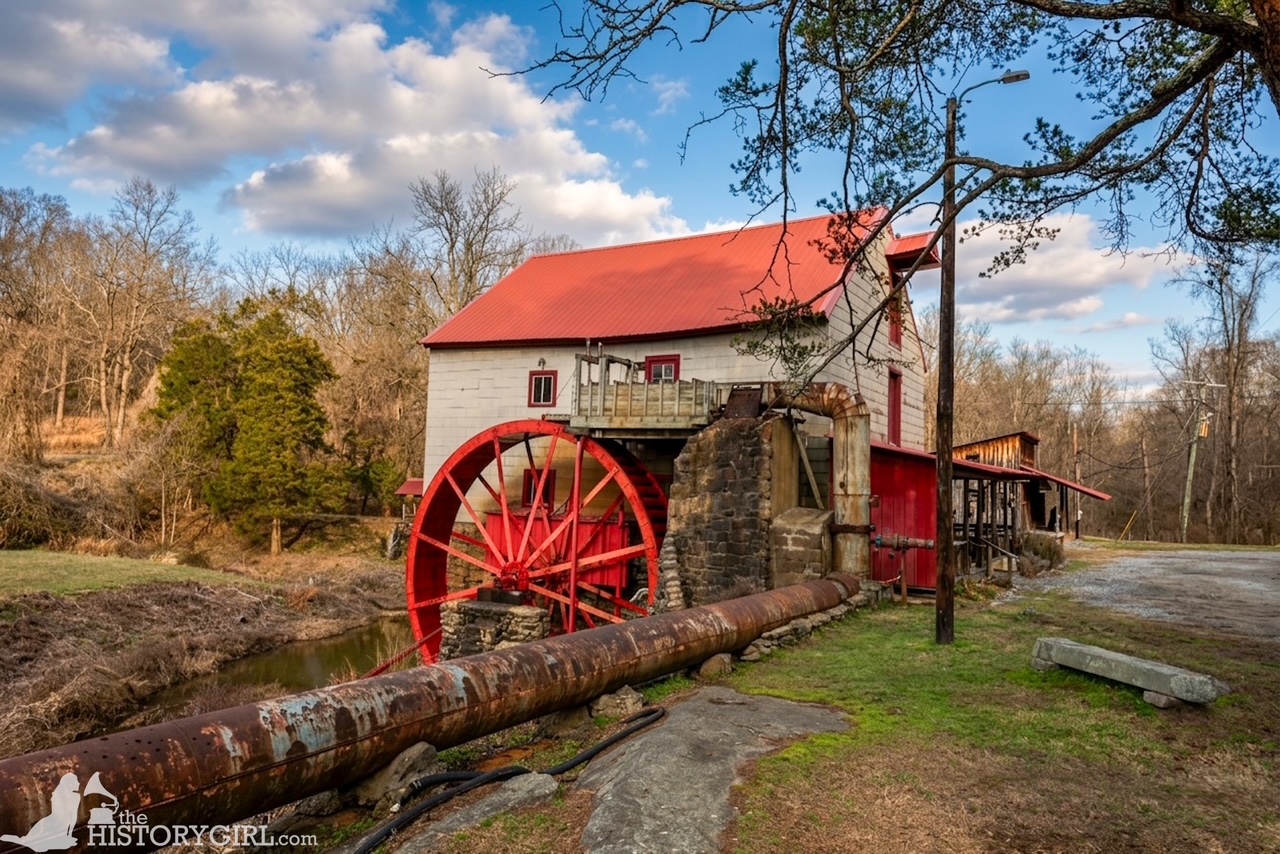
But the “Old Mill” lived up to its reputation for survival. Danch utilized the downtime to bring the building up to code, install modern climate control, and—most impressively—work toward restoring the 1904 waterwheel. The goal is for the wheel to once again generate power, this time in the form of electricity for the building’s tenants.
If You Visit
The Old Mill is the anchor of the Allentown Historic District, which includes over 200 buildings listed on the National Register of Historic Places.
- Location: 42 Main Street, Allentown, NJ 08501.
- The Experience: Today, the mill is a multi-use complex. You can grab a coffee or a meal and sit among the massive hand-hewn timbers and restored milling machinery.
- The Walk: After visiting the mill, take a stroll across the adjacent bridge (recently replaced by the county to mirror the historic aesthetic) to enjoy the view of the pond and the falls.
For More Information
The Old Mill Allentown (www.oldmillallentown.com)


Leave a Reply to UnknownCancel reply