
Silent Ruins and Empty Rooms: The Resilience of Atsion Village
In the heart of the New Jersey Pine Barrens, where the cedar-colored water of the Mullica River flows, lies Atsion Village. Today, it is a quiet stop for hikers and kayakers in Shamong Township, but for nearly two centuries, it was a site of frantic industrial ambition.

Atsion tells a classic story of American boom and bust. It has been an iron forge, a cotton mill, a failed fruit-farming colony, and a cranberry packing plant. While the machines have stopped and the workers are long gone, the “empty rooms” of Atsion still echo with the history of the entrepreneurs who tried to tame the wilderness.
The Iron Dynasty
The village began in 1765 when Charles Read, a prominent colonial figure, established an iron forge. He named it “Atsion,” a Native American word for the “strong-colored stream” nearby.
The early forge converted pig iron from nearby Batsto into bar iron. However, the iron industry was volatile. It wasn’t until 1824, when Samuel Richards purchased the property, that Atsion entered its golden age. Richards was part of an “iron dynasty,” following in the footsteps of his father, the famous ironmaster of Batsto.
The Mansion on the Bluff
In 1826, Samuel Richards built the Atsion Mansion as a summer retreat for his family. This Greek Revival structure is a masterpiece of South Jersey “Jersey Sandstone” and iron.
Unique Features:
- The Columns: Look closely at the pillars on the wide porch. They aren’t wood or stone; they are cast-iron water pipes. Richards’ other furnace had a contract with the City of Philadelphia to produce water mains, and he used the “overstock” to support his own home.
- The Sills: Even the window sills were cast from iron—a subtle advertisement for the family business.
- The Date: If you look at the top of the downspouts, you will see the year “1826” proudly cast into the metal.
Unlike many historic homes, the mansion was never modernized. It never had electricity or indoor plumbing, making it one of the most authentic early 19th-century interiors in the state. A $1.3 million restoration in 2011 carefully matched the original paint colors, returning the rooms to their Richards-era splendor.
The Village Shop and the Cotton Mill
Across from the mansion sits the Atsion Company Store (1827). For over a century, it was the social heart of the town. Ledgers from 1827 show that coffee cost 16 cents a pound and eggs were 11 cents a dozen. It served as the general store and post office until 1946.
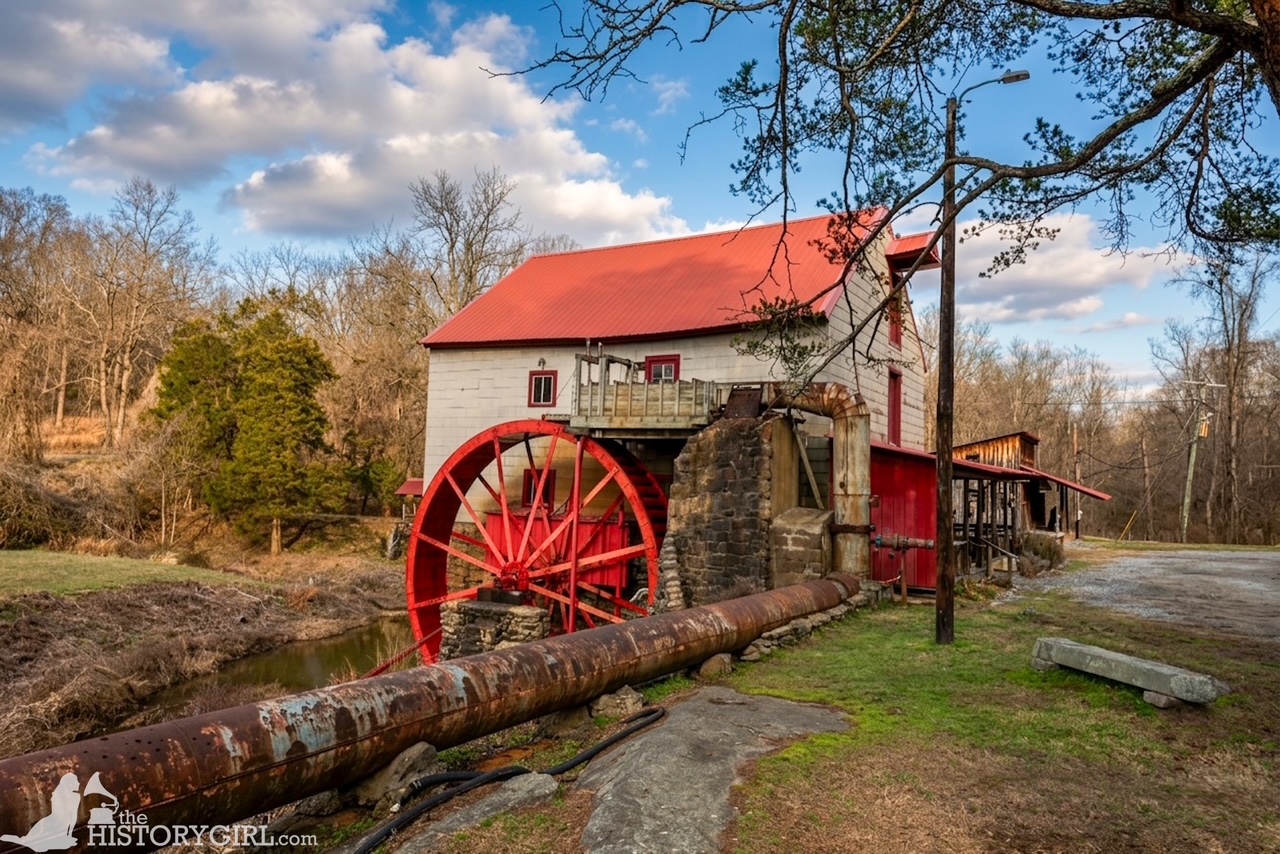
Down by the water, you can see the ruins of the Atsion Mill. Over the years, this building was constantly repurposed:
- 1852: A failed paper mill.
- 1871: A successful cotton mill that produced 500 pounds of yarn a week.
- 1892: A cranberry sorting and packing plant.
Tragically, the mill was destroyed by arson in 1977, leaving behind the jagged stone ruins that visitors see today.
The Water War and Joseph Wharton
In 1892, the industrialist Joseph Wharton purchased Atsion. He wasn’t interested in iron; he wanted the water. Wharton planned to pump the pristine water from the Pine Barrens aquifer to Philadelphia.
The New Jersey Legislature, horrified by the idea of selling the state’s most precious resource to Pennsylvania, passed a law in 1895 prohibiting the export of New Jersey’s water across state lines. This law remains on the books today. Because his “water plot” failed, Wharton kept the land as a vast agricultural and timber reserve, which eventually became the Wharton State Forest in 1954.
If You Visit
Atsion is a highlight of the Wharton State Forest and is particularly beautiful in the autumn when the blueberry bushes turn crimson.
- Location: 715 US-206, Shamong, NJ 08088.
- The Mansion: Seasonal tours of the Atsion Mansion are conducted by the State Park Service. Since there is no lighting inside, the tours are best experienced on bright, sunny days.
- The Ruins: A self-guided walking tour takes you past the store, the church, the mill ruins, and the unique poured-concrete barn from the Wharton era.
- Recreation: Across the street is the Atsion Lake recreation area, famous for its “tea-colored” water, dyed by the tannins of the cedar trees.
For More Information
Wharton State Forest / NJ State Park Service (www.njparksandforests.org)


Leave a Reply