
Industry in the Wilderness: Exploring Long Pond Ironworks
Hidden in the dense forests of northern Passaic County, just miles from the New York border, lies a ghost town.
This is Long Pond Ironworks State Park. Today, it is a quiet place for hikers and fishermen, but for over 120 years, it was a roaring industrial plantation that churned out iron for the Revolutionary War, the War of 1812, and the Civil War.

Unlike urban centers like Paterson or Newark, Long Pond was industry in the wild—a company town carved out of the rugged Highlands where miners, ironmasters, and laborers lived and died by the furnace fires.
The Iron Kingdom
The story begins in 1766 with a German ironmaster named Peter Hasenclever. Backed by wealthy British investors, Hasenclever had a vision: to create a massive iron empire in the New Jersey wilderness.
- The Scale: He purchased 55,000 acres of land and imported over 500 European workers to clear roads, dam rivers, and build furnaces.
- The Operations: He established ironworks at Ringwood, Charlottenburg, and here at Long Pond.
Although Hasenclever was eventually fired for spending too much money, his infrastructure laid the groundwork for a century of production. During the Revolutionary War, the site was managed by Robert Erskine, George Washington’s surveyor-general, making Long Pond a critical supplier of ammunition and stoves for the Continental Army.
A Diverse Workforce
While the management was European, the labor force was diverse.
- The Ramapough Lenape: Many of the workers at the forge were local Ramapough Lenape people. They remained a vital part of the workforce through the 1880s and continued to live in the village long after the fires went out.
- The Population: At its peak in the mid-19th century under owners Peter Cooper and Abram Hewitt, the village employed as many as 600 people.
How an Iron Furnace Works
The heart of the operation was the Blast Furnace.
The Structure: A stone tower, typically 25 to 60 feet tall, built against a hillside.
- The Process: Workers would cross a bridge to the top of the stack and dump in layers of iron ore, charcoal, and limestone.
- The Blast: A massive waterwheel at the bottom powered bellows that blasted air into the furnace, raising the temperature high enough to melt the rock.
- The Result: Molten iron would flow out of the bottom into sand molds, creating bars known as “pig iron.”
The Ruins You Can See Today
The fires were extinguished for the last time on April 30, 1882, but the ruins remain remarkably intact.
1. The Furnaces: Three furnaces still stand in the woods.
- The Colonial Furnace (c. 1766): Now largely an archaeological ruin.
- The Civil War Furnaces (c. 1860s): Two massive stone towers that rise out of the forest floor. One, nicknamed “Lucy,” was the last to operate.
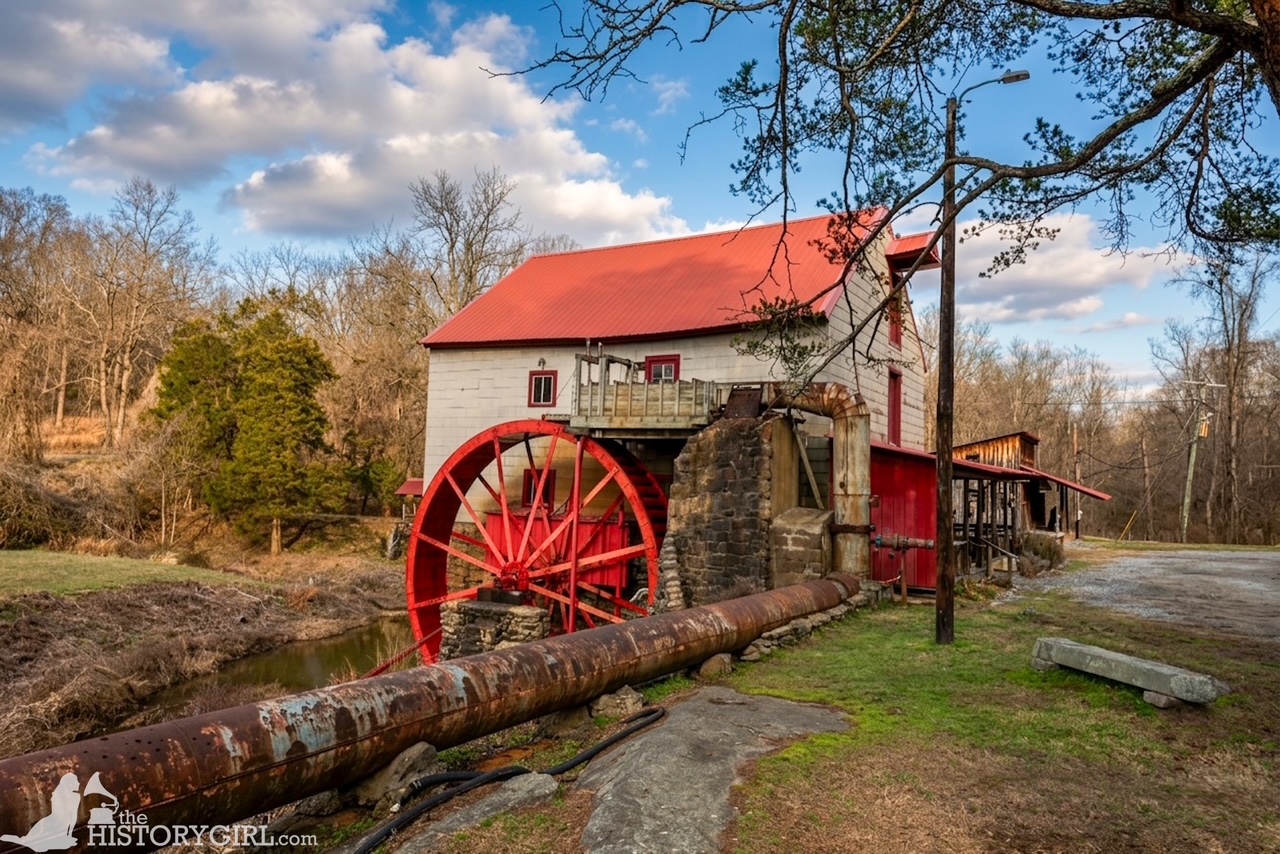
2. The Waterwheels: Two 25-foot waterwheels once powered the blast. Though damaged by fire in 1957, one was reconstructed in 1996 and sits on its original axle, giving visitors a sense of the immense power generated by the Wanaque River.
3. The Ghost Village: Walking down the old Furnace Road feels like stepping back in time.
- The Company Store: The stone ruins of the store still stand. This is where workers bought their food and supplies on credit (often keeping them indebted to the company).
- Worker Housing: Several homes remain, including the Stites and Laird-West houses.
- The Visitor Center: Housed in a restored Civil War-era worker’s duplex, this museum offers a glimpse into life in the village.
4. The Waterwheel Pit: Perhaps the most haunting ruin is the massive, unfinished stone pit meant to hold a 50-foot waterwheel. Started by Abram Hewitt in the 1870s to modernize the plant, it was abandoned when the Panic of 1873 crashed the economy. It remains a monument to ambition cut short.
If You Visit
Long Pond Ironworks is a State Park and Historic District open to the public year-round.
- Location: 1334 Greenwood Lake Turnpike, Hewitt, NJ 07421.
- The Museum: The Old Country Store (Visitor Center) is generally open on weekends from April through November.
- Hiking: The trails are relatively flat and wind directly through the historic district, making it accessible for most skill levels.
For More Information
Friends of Long Pond Ironworks (www.longpondironworks.org)


Leave a Reply