
Hidden in the Jersey Mountains: The Rise, Fall, and Rebirth of Waterloo
When you hear the name “Waterloo,” you might think of Napoleon’s defeat in Belgium, or perhaps the city in Iowa. But tucked away in the rugged hills of Sussex County, New Jersey, just minutes from Interstate 80, lies a Waterloo that tells a purely American story.

Waterloo Village is a “ghost town” that refuses to fade away. It is a beautifully preserved industrial hamlet that has lived three distinct lives: first as a Revolutionary War iron forge, then as a bustling port on the Morris Canal, and finally as a legendary New Jersey concert venue.
After falling into disrepair in the early 2000s, this sleeping giant is finally waking up. Here is the story of the village that helped build the Garden State.
Life 1: The New Jersey Iron Forge (1760s–1790s)
Long before it was a village, this site was the Andover Forge. Established in 1761, it processed iron ore from the nearby Andover Mine—considered the best hematite deposit in New Jersey.
The Revolutionary Connection: During the Revolutionary War, the forge was so valuable that the Board of War confiscated it from its Loyalist owners in 1778. For three years, this site in the NJ wilderness churned out armaments for George Washington’s Continental Army.
However, the forge was a victim of its own success. To fuel the fires, workers clear-cut the surrounding forests for charcoal. By 1795, with no wood left to burn, the forge closed, and the site went silent.
Life 2: The Canal Boom (1830s–1900s)
In the 1820s, a new owner named John Smith bought the desolate property just as a miracle of engineering was coming to northern New Jersey: The Morris Canal.
The Morris Canal was unlike any other waterway in the world. Stretching 109 miles from Phillipsburg (on the Delaware River) to Jersey City (on the Hudson), it didn’t just go around the Jersey Highlands—it went over them.
- The Inclined Planes: Using a system of water-powered turbine rails, the canal lifted boats up steep elevations. Waterloo was home to Inclined Plane 4 West.
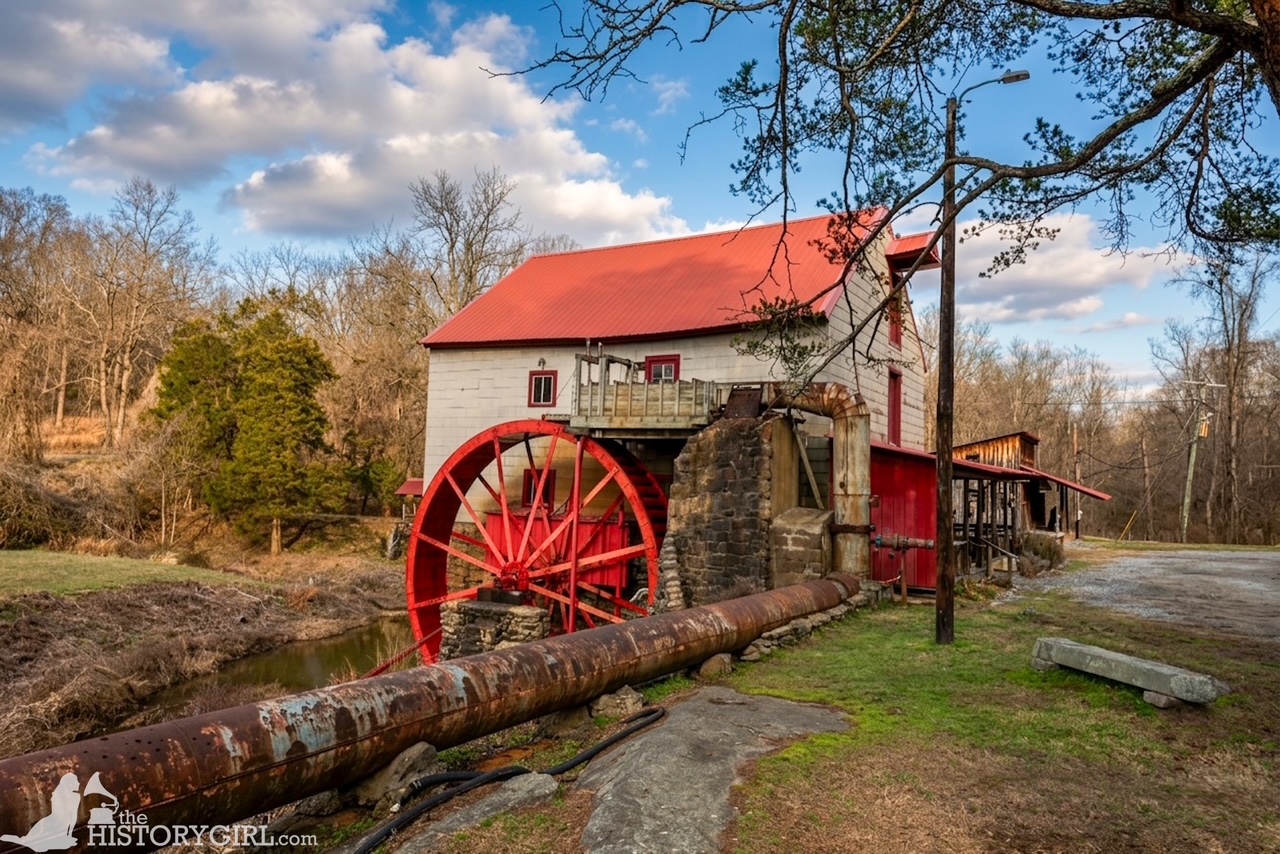
- The Hub: Because boats had to wait their turn to go up or down the plane, Waterloo became a natural rest stop. The Smith family capitalized on this, building a grist mill, a general store, and a tavern to serve the canal traffic carrying Pennsylvania coal to New York.
The Architecture of Wealth: The Smith family became incredibly wealthy, and their homes still stand as a testament to this NJ boom time:
- The Homestead: The original modest stone house (c. 1760).

- The Peter D. Smith House (1874): A massive Second Empire Victorian mansion with a mansard roof and cupola.

- The Seymour R. Smith House (1876): A stylish blend of Queen Anne and Italianate architecture.
Life 3: The Concert Era (1960s–2000s)
By the early 20th century, railroads killed the canal, and the village was abandoned in 1924.
However, in the 1960s, designers Percival Leach and Louis Gualandi bought the town and restored it. For decades, Waterloo Village was known as the “Tanglewood of New Jersey,” hosting the Metropolitan Opera and massive rock concerts that drew crowds of 20,000 people to Byram Township.
Sadly, mismanagement and state budget cuts forced the village to close in 2006. For several years, the buildings sat empty, peeling and fading.
The Rebirth: Waterloo Today
Today, the village is in the midst of a fourth act. Thanks to the Canal Society of New Jersey and the State Park Service, Waterloo is slowly being brought back to life.
While it is no longer a daily living history museum with full-time staff, it has become a hub for special events.
- Canal Heritage Days: Held on select Saturdays in the summer and fall, these events open up the blacksmith shop, the carpentry shop, and the grist mill to visitors.
- The Methodist Church (1859): This building never actually closed; it has held services continuously for over 150 years.
Waterloo remains a stunning place to walk. You can stroll past the silent Victorian mansions, look down into the empty lock of the canal, and imagine the days when boats climbed the mountains of New Jersey.
If You Visit
- Location: Waterloo Road, Stanhope, NJ 07874 (Allamuchy Mountain State Park).
- Access: The grounds are open to the public from sunrise to sunset for hiking and walking.
- Interiors: The historic buildings are generally closed to the public except during specific Canal Heritage Days or special events.
For More Information
The Canal Society of New Jersey (www.canalsocietynj.org)

Leave a Reply