
The Wooden Palace That Looks Like Stone: The Secrets of Mount Vernon
Perched on a grassy rise overlooking the Potomac River, Mount Vernon is perhaps the most famous home in America. For over 200 years, it has served as a symbol of George Washington’s dignity and the young nation’s ambition.

But if you look closely at the “stone” walls of the mansion, you’ll discover a secret. It isn’t stone at all. It’s wood.
From architectural optical illusions to the women who saved the estate from ruin, here is the story behind Washington’s beloved home.
From “Little Hunting Creek” to Mount Vernon
The Washington family had owned land in this area since 1674. Originally, the estate was known as Little Hunting Creek Plantation.
The name changed under George’s older half-brother, Lawrence Washington. He renamed the estate Mount Vernon in honor of Vice Admiral Edward Vernon, his commanding officer in the British Navy. When George inherited the property in 1761 (following the death of Lawrence’s widow), he kept the name.
The Great Architectural Lie: Rustication
Washington wanted his home to project permanence and power, qualities associated with stone buildings in Europe. However, quarrying stone was expensive and labor-intensive.
Washington’s solution? Rustication.
- The Process: The exterior of the mansion is actually yellow pine siding. The boards were beveled and cut at regular intervals to mimic the geometry of stone blocks.
- The Finish: Washington had the wood painted, and while the paint was still wet, workers threw fine sand onto it. The sand stuck to the paint, creating a rough, stone-like texture.
- The Result: From a distance (and even up close), the wooden house looks like a stone fortress. Washington was so particular about this that he left specific instructions on the process in 1796, which preservations still follow today using sand from the original local source.
Building in Stages
The mansion wasn’t built in a day. It evolved along with Washington’s career.
- 1735: George’s father, Augustine, built the core of the house—a modest 1.5-story structure.
- 1758: George raised the roof to make it a full 2.5 stories.
- 1774: He added the South Wing (containing his private study).
- 1776–1778: He added the North Wing (the “New Room” for entertaining) and the iconic Piazza overlooking the river.
- 1787: The final touch—the cupola and weathervane.
The Dove of Peace: The weathervane atop the cupola is unique. Commissioned while Washington was presiding over the Constitutional Convention in Philadelphia, it depicts a dove with an olive branch. It was a symbol of his hope for peace in the new nation.
The Landscape: Order and Nature
Washington was a surveyor by trade, and his obsession with order is visible in the landscape.
- The Colonnades: Curved, covered walkways connect the main house to the kitchen and servant’s hall. This created a cour d’honneur (Court of Honor)—a three-sided courtyard that framed the mansion beautifully for approaching visitors.
- The Bowling Green: The large grassy lawn in front of the house is shaped like a guitar. Washington instructed that it be kept perfectly smooth, rolled regularly to maintain the pristine appearance.

The Women Who Saved It
After Washington died in 1799, the estate passed through generations of the family, but without his wealth, it fell into disrepair. By the 1850s, the roof was sagging, and the porch was propped up by ship masts.
In 1853, a woman named Louisa Bird Cunningham passed the estate by boat. Shocked by the decay, she wrote a letter to her daughter, Ann Pamela Cunningham: “If the men of America have not yet found time to save it… the women should.”
Ann took up the challenge. She founded the Mount Vernon Ladies’ Association (MVLA)—the first national historic preservation organization in the U.S. They raised $200,000 (a massive sum at the time) and purchased the mansion in 1860.
The Civil War Neutral Zone: During the Civil War, the estate was officially neutral ground. Soldiers from both the Union and Confederacy visited the grave of Washington, often laying down their arms outside the gates before entering.
If You Visit
Mount Vernon is owned and operated by the MVLA to this day. It is open 365 days a year.
- The Mansion: You must buy a specific timed ticket to enter the house.
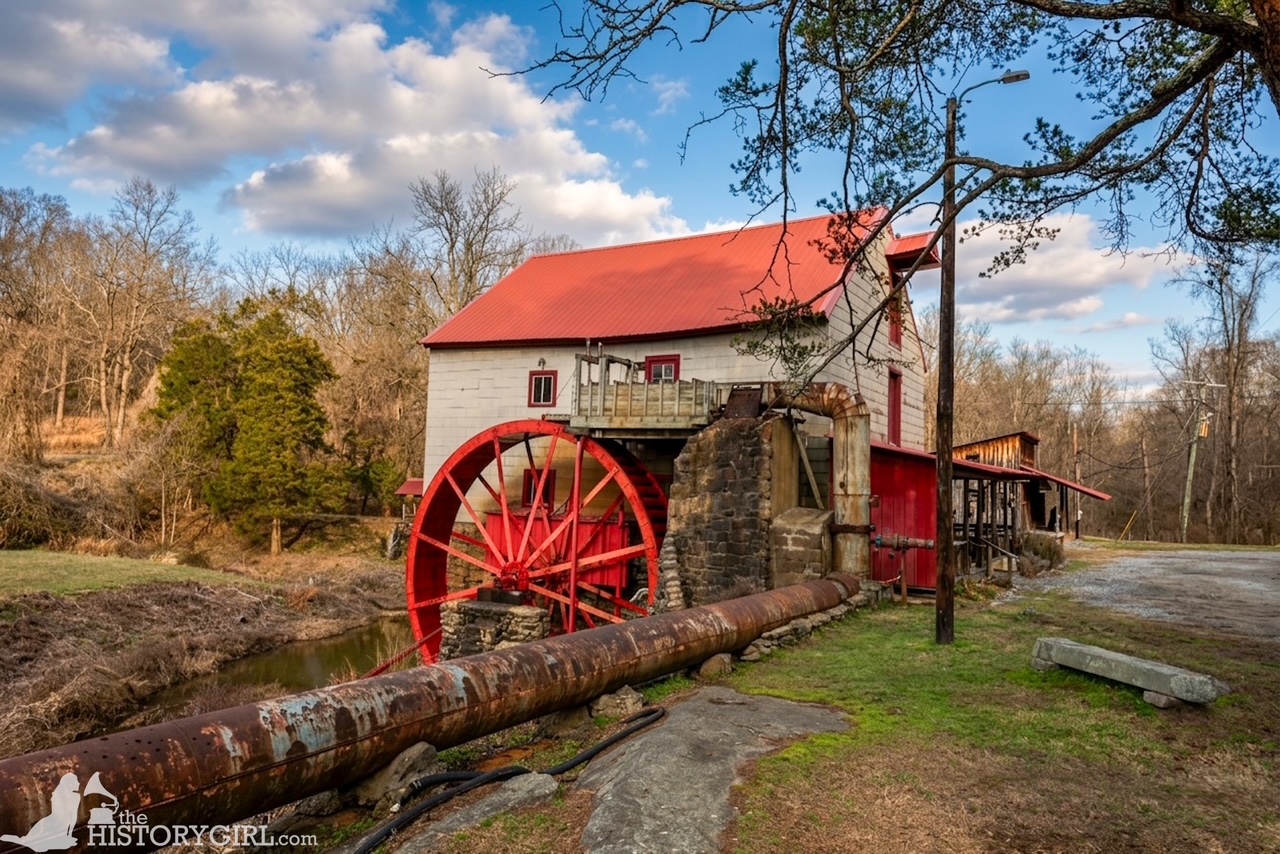
- The Grist Mill & Distillery: Located about 3 miles from the main estate, these reconstructed working industrial sites show Washington’s entrepreneurial side. (The distillery was one of the largest in America!).
- The Tombs: Both the old family vault and the new tomb (where George and Martha rest) are located on the grounds.
For More Information
George Washington’s Mount Vernon (www.mountvernon.org)

Leave a Reply