
Bicycles, Monorails, and Industrial Dreams: The Story of Smithville
When we think of New Jersey’s historic industrial communities, names like Roebling (wire rope), Batsto (iron and glass), and Allaire (bog iron) usually top the list. But hidden in Eastampton, Burlington County, lies an industrial village that history almost forgot.
This is Smithville. Once a global hub for woodworking machinery, it was the birthplace of a radical new bicycle design and home to one of the strangest commuter trains in history: a human-powered bicycle monorail.

The Struggle for Water Power
Before it was an industrial powerhouse, this land along the Rancocas Creek was a legal nightmare.
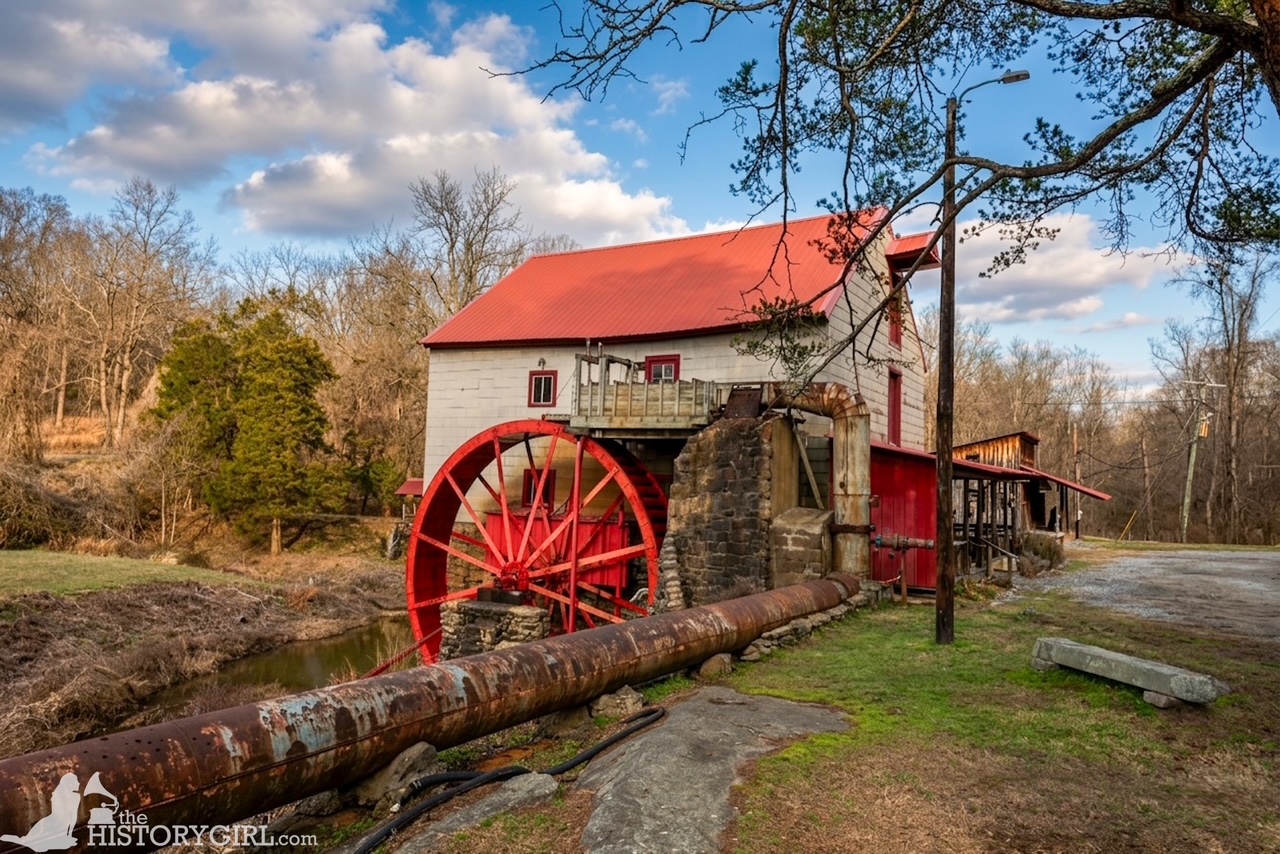
- 1776: Jacob Parker bought 37 acres hoping to build a dam and mill. However, colonial laws regarding water rights were strict. Parker spent twelve years in litigation with his neighbor, Thomas Merrit, over the dam rights. He eventually went bankrupt in 1830, though he managed to build a grist mill and saw mill before he lost it all.
- 1831: The Shreve brothers (Jonathan and Samuel) bought the site for $14,000. They established “Shreveville,” a textile village dedicated to calico printing and cotton thread.
- The Boom: By 1850, the village had 400 residents and 60 homes.
- The Bust: The success was short-lived. Massive debt and the sudden deaths of both brothers in 1856 and 1857 left the village abandoned and decaying for nearly a decade.
Enter the Visionary: Hezekiah Bradley Smith
In 1865, the village found its savior. Hezekiah Bradley Smith, an eccentric inventor and politician, bought the derelict property for $20,000.
Smith wasn’t interested in cotton; he was a machinist. He saw the water power and rural setting as the perfect place to build a utopian “Industrial Village.” He renamed the town Smithville and went to work.
The Model Village: Smith believed a happy worker was a productive worker. He demolished the old slums and built a self-sustaining community that included:
- A Farm: To provide fresh, affordable produce to employees.
- Culture: An Opera House for entertainment and a school for children.
- Housing: Dormitories for single mechanics and sturdy brick homes for families.
- Progressive Labor: He instituted a nine-hour workday (radical for the time) and paid top wages.

The Machine Empire
In 1878, Smith incorporated the H.B. Smith Machine Company. The factory was a behemoth, producing 25% of all woodworking machinery in the United States.
Smith also expanded his own residence, the Smithville Mansion. He added a service wing that would make any modern billionaire jealous, featuring a game room, a massive billiard room with vaulted ceilings, and a private bowling alley.
The Star Bicycle
In 1880, Smith met an inventor named George W. Pressey who had a new idea for a bicycle.
At the time, the “Penny Farthing” (High Wheeler) was the standard bike. It had a massive wheel in the front and a tiny one in the back. It was fast, but dangerous—if you hit a bump, you flew over the handlebars (a “header”).
Smith began manufacturing the American Star Bicycle. The design flipped the script: the small wheel was in the front for steering, and the large drive wheel was in the back. It was safer, more stable, and became a national sensation.
The Human-Powered Monorail
Perhaps the strangest chapter in Smithville’s history involves the H.B. Smith Bicycle Railway.
Invented by Arthur E. Hotchkiss in 1892, this was a commuter line designed to get workers from Mount Holly to the Smithville factories. But it wasn’t a steam train.
It was a bicycle monorail.
- The Design: Riders sat on a contraption suspended on a single rail. A second rail above stabilized the bike.
- The Commute: The track ran for 1.8 miles in a straight line. Riders could hit speeds of 18 mph, gliding through the woods to work.
- The Problem: It was a single track. If you met a rider coming the other way, one of you had to get off. Also, if you were stuck behind a slow peddler, there was no way to pass.
The novelty wore off quickly, and the railway went bankrupt by 1898.
Smithville Today
After the H.B. Smith Machine Company declined during the Great Depression, the village eventually fell into ruin. In 1975, Burlington County purchased the property to save it.
Today, Historic Smithville Park is a gem of the county park system.
- The Mansion: Fully restored and open for tours.
- The Ruins: The skeletons of the massive factory complex still stand near the creek, offering a haunting glimpse of the industrial past.
- The Museum: One of the oldest worker’s cottages (c. 1840) has been restored as a Welcome Center and museum.
If You Visit
The Trails: You can walk the path of the old Bicycle Railway, though sadly, you have to use your own feet.
Location: 803 Smithville Road, Eastampton, NJ 08060.
The Mansion: Tours are typically available on Thursdays and Sundays (check the website for seasonal hours).
Leave a Reply