
Montague: Standing at the Peak of New Jersey
If you travel as far north as you can go in Sussex County, you will find yourself in Montague Township. This is the literal “tip” of New Jersey—a rugged, breathtaking landscape where the Delaware River bends and the mountains reach their highest point.
Montague is a community defined by extremes. It is home to High Point State Park, the highest elevation in the state (1,803 feet), and it sits within the Delaware Water Gap National Recreation Area. But Montague’s history is also defined by a fight for survival against a government project that almost erased it from existence.
A Royal Mystery
Montague was officially incorporated as one of New Jersey’s initial 104 townships in 1798, but its roots go back to a royal patent approved by King George II in 1759.
The town’s namesake remains a mystery to this day. Was it named for Lady Mary Wortley Montagu, a famous 18th-century writer? Or perhaps one of the Dukes of Montagu? Regardless of the origin, the name was a prominent one in the British Empire, signaling the importance of this frontier settlement.
Life in the Upper Delaware Valley
Before the bridges were built, Montague was a river-crossing town. Early settlers relied on ferries to reach Pennsylvania until the first bridge to Milford was constructed in 1829.
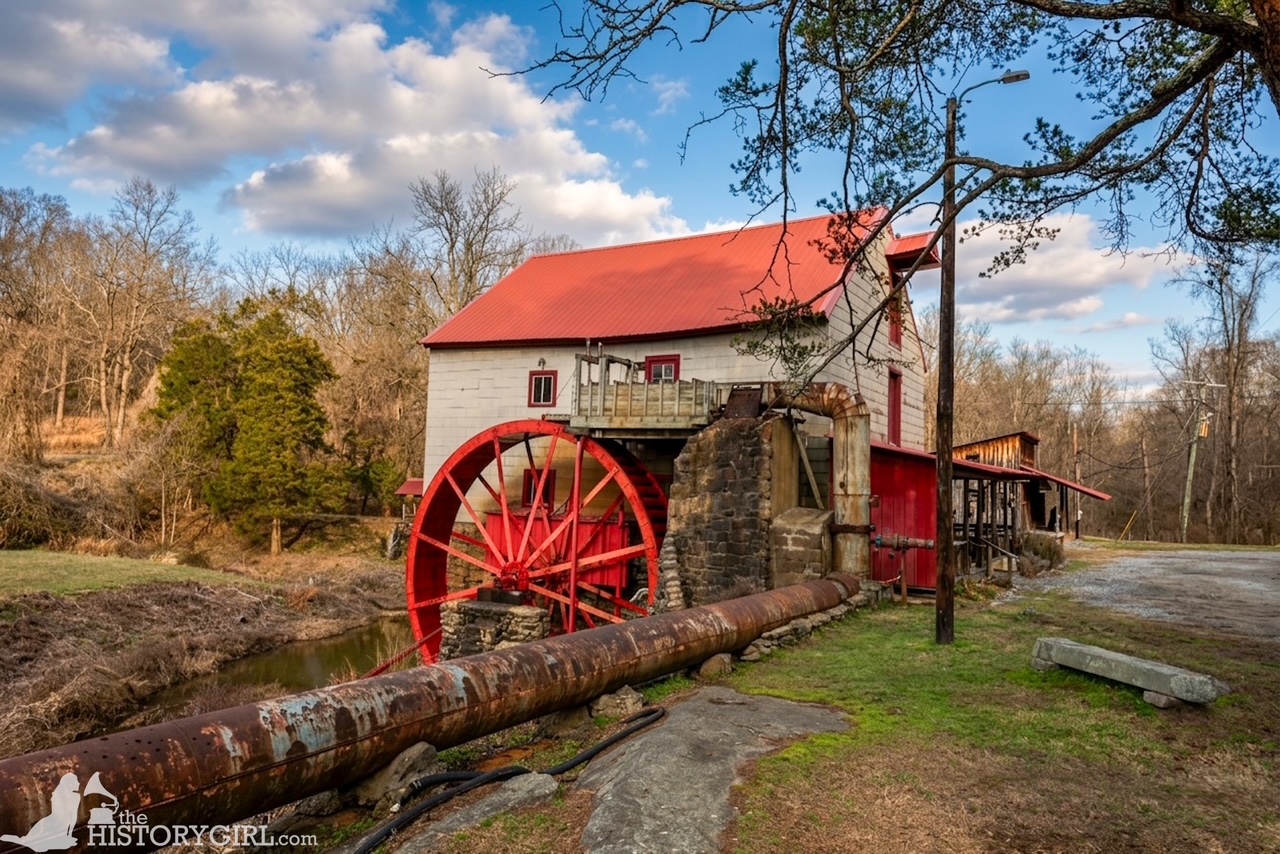
The community was originally a collection of small hamlets—Brick House, Millville, and Duttonville. These were self-sufficient hubs of industry with sawmills, gristmills, and tanneries that utilized the powerful mountain streams.
The Foster-Armstrong House: A Tavern on the Road
Just off Route 206 sits the Foster-Armstrong House (c. 1790). This house serves as a window into the “Village of Montague.”

- The Design: The house is a fascinating hybrid. The wood-frame section, built by Julius Foster, reflects Coastal Dutch architecture with its five-bay center hall. The stone wing was added later by his son-in-law, James Britten Armstrong.
- The Function: For decades, this was a “Road House” or tavern. In an era when travel was slow and treacherous, the Foster-Armstrong house provided a warm fire, a distillery, and a general store for travelers waiting to cross the Delaware.
- The Evolution: In the late 1790s, the house featured a grand two-story porch—a classic sign of a public house. While that porch was replaced by a one-story version in the 1930s, the house remains a sturdy sentinel of the old River Road.
The Schoolhouse in the Stone
Further south on Route 206 is the Nelden-Roberts Stonehouse. Built in the early 1800s, this rustic, vernacular structure served a unique purpose: it was a one-room schoolhouse with living quarters for the teacher on the second floor. Today, it is restored to look exactly as it did in the 1820s, complete with wooden benches and slate boards.
The Battle for Tocks Island
In the 1960s, the history of Montague was nearly buried under water.
- The Plan: The federal government proposed the Tocks Island Dam Project, which would have dammed the Delaware River to create a 37-mile-long reservoir.
- The Impact: To make way for the water, the government used eminent domain to purchase thousands of acres. Families were evicted, and historic homes were left to rot.
- The Victory: Thanks to a massive grassroots environmental movement, the dam project was defeated in 1975.
While the dam was never built, the “ghost towns” left behind became part of the Delaware Water Gap National Recreation Area. Today, local volunteers with the Montague Association for the Restoration of Community History (MARCH) have worked tirelessly to bring these abandoned homes back to life.
If You Visit
Montague is a haven for those who love both history and the great outdoors.
- Location: Route 206, Montague, NJ 07827 (The northernmost point of Sussex County).
- The Views: Drive to the top of High Point State Park to see the 220-foot monument and views that stretch across three states.
- The Museums: Both the Foster-Armstrong House and the Nelden-Roberts Stonehouse are open for tours on select days, operated by dedicated local historians.
For More Information
Delaware Water Gap National Recreation Area (www.nps.gov/dewa)
Montague Association for the Restoration of Community History (www.montaguehistory.org)

Leave a Reply