
Two Hundred Years of Milling at Walnford: A Monmouth County Legacy
In the quiet, rural landscape of Upper Freehold, New Jersey, lies a perfectly preserved window into the state’s agricultural past. Historic Walnford is a rare survivor—a former industrial village that served as the home and headquarters of the Waln family for over two centuries.

While many colonial mill towns were swallowed by the sprawl of the 20th century, Walnford’s remote location and the dedication of its owners kept it virtually unchanged. Today, it stands as one of New Jersey’s premier showcases for the evolution of milling and country estate life.
The Quaker Merchant’s Retreat
The story of Walnford begins in 1772, when a prosperous Philadelphia Quaker merchant named Richard Waln saw an advertisement for a ready-made industrial site on the Crosswicks Creek.
The property was already an established hub, boasting a grist mill, saw mill, fulling mill, and several artisan shops. Waln purchased the site in 1773, built an elegant (yet Quaker-simple) home, and moved his family away from the political unrest of Philadelphia just as the American Revolution was beginning to simmer.
The Rise of the Industrial Village
While Richard Waln was a merchant at heart, his son Nicholas Waln became the true engine of the estate’s prosperity. Taking over in 1799, Nicholas expanded the farm from its original 320 acres to a massive 1,300-acre empire.
- The Population: At its peak, the village housed approximately 50 people, including tenant farmers, millers, and domestic workers.
- The Marketplace: Walnford was a “factory in the field,” producing flour, lumber, and pork that was shipped directly to the hungry markets of Philadelphia.
Innovation: The 1822 Automated Mill
In the early 1800s, New Jersey millers were revolutionized by the inventions of Oliver Evans, a Delaware millwright who received the third patent ever issued by the U.S. government. Evans designed a completely automated grist mill—a system of elevators and conveyors that moved grain from floor to floor without being touched by human hands.
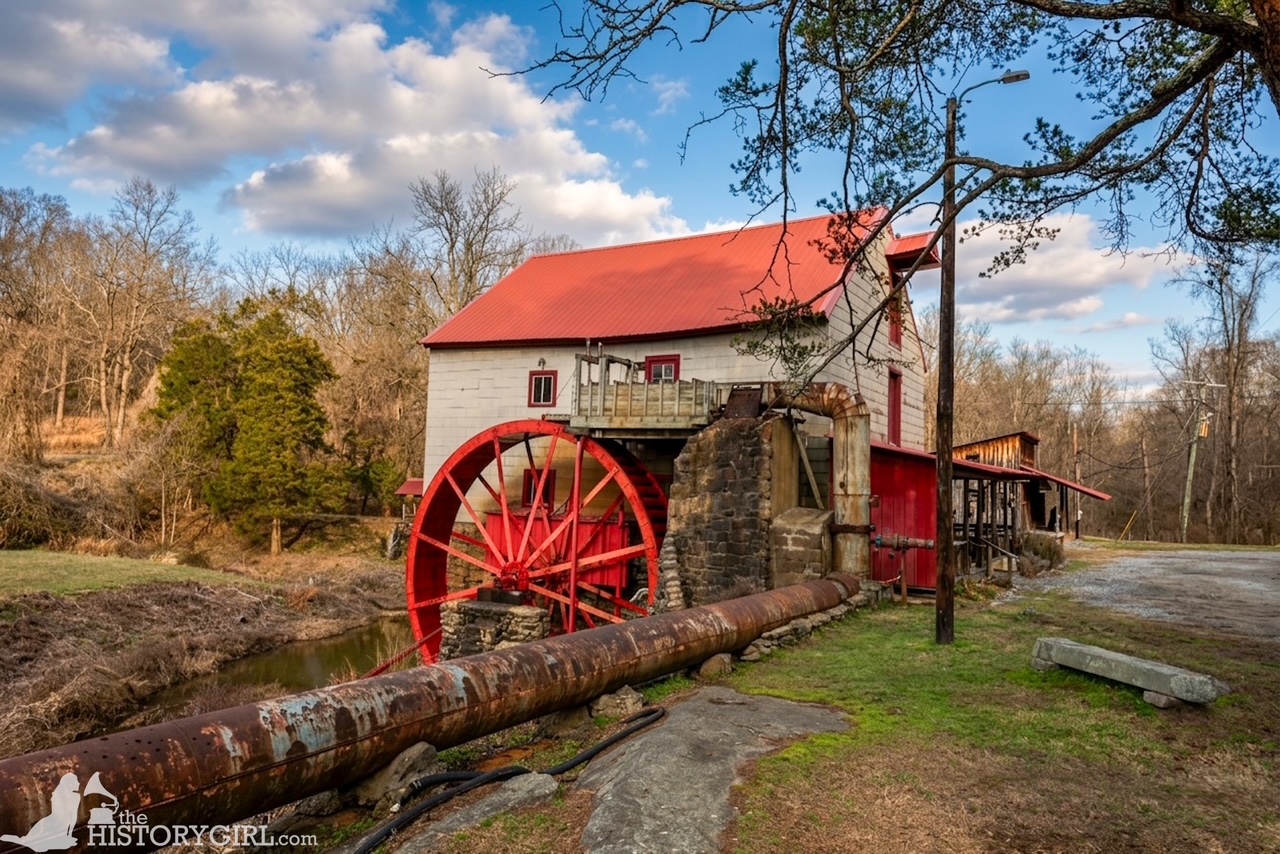
In 1822, Nicholas Waln embraced this “high-tech” future. He rebuilt the Walnford mill using Evans’ principles, a four-story structure that stands to this day. You can still see his initials and the date—“N W 1822”—carved into the cornerstone.
Resilience Through the Victorian Era
Following Nicholas’s death in 1848, the management of the estate fell to the women of the family. His daughter, Sarah Waln Hendrickson, became a formidable manager, overseeing the property for over 35 years.
- The Fire: When a disastrous fire destroyed the mill in 1872, Sarah didn’t hesitate to rebuild it.
- The Carriage House: In 1879, she constructed a grand, fashionable carriage house and cow barn to house her prize horses and a herd of 48 Guernsey cows.
As the “Breadbasket of the West” (the Midwest) began to dominate the flour market, Sarah shifted the estate’s focus. Walnford began its transition from a bustling commercial center to a refined country retreat.
From Family Estate to Public Treasure
The last major transformation occurred in the early 1900s, when Richard Waln Meirs and his wife Ann turned the property into a Colonial Revival masterpiece. They were early pioneers in historic preservation, restoring the 18th-century home with period-accurate hardware, paint colors, and heirlooms.
In 1985, after 200 years of Waln family ownership and a brief residency by the Mullen family, the site was donated to the Monmouth County Park System.
If You Visit
Today, Historic Walnford is part of the Monmouth County Park System and is open year-round. It is one of the few places in New Jersey where you can still see a water-powered grist mill in operation.
- Location: 62 Walnford Road, Upper Freehold, NJ 08501.
- The Mill: Demonstrations of the water-powered milling process are often held on weekends. Watching the massive wooden gears turn is an unforgettable experience.
- The Grounds: The site features the 1773 house, the 1822 mill, the 1879 carriage house, and miles of serene walking paths along the creek.
- Architecture: Take note of the transition from the simple 18th-century farmhouse to the 19th-century “Gentleman’s Farm” outbuildings.
For More Information:
- Monmouth County Park System (www.monmouthcountyparks.com)
Leave a Reply