
The Postcard Perfect Survivor: Inside New Jersey’s Red Mill
If you search for “New Jersey” on Instagram or Flickr, you will almost certainly find a photo of the Red Mill in Clinton.

Perched on the banks of the South Branch of the Raritan River, with its reflection shimmering in the water and a cliff rising behind it, it is arguably the most photographed building in the state. But this isn’t just a scenic prop. For 118 years, this structure was a gritty, dusty, loud industrial workhorse that helped build Hunterdon County.
A Mill of Many Lives
The Red Mill is a survivor of the “boom and bust” cycle of American industry. Since its construction circa 1810, it failed multiple times, changed owners constantly, and had to reinvent itself to stay alive.
The Timeline of Transformation:
- 1810 (Wool): Built by Ralph Hunt to process wool. By 1820, the domestic cloth market crashed, and Hunt lost the property.
- 1828 (Grist & Plaster): John B. Taylor and John Bray took over. They ground flour and stone plaster. Fun Fact: These partners renamed the area “Clinton” in honor of NY Governor DeWitt Clinton.
- 1873 (Peach Baskets): Philip Gulick used the mill to grind grist and, adapting to the local agricultural boom, manufacture peach baskets.
- 1905 (Graphite & Talc): The Tomson brothers bought the mill. They first ground graphite (used for stove blacking), but the black dust coated the town and angered the neighbors. They switched to grinding soapstone into talc for the Colgate Company.
When the mill finally closed in 1928, it was the last operating talc mill in the United States.
Anatomy of the Building
The mill you see today looks very different from the original 1810 structure.
- The Roof: Originally a gable roof, it was raised to a gambrel (barn-style) roof to add storage space.
- The Monitor: Look at the roofline on the river side. That boxy extension sticking up is called a monitor. Added in 1908, it housed the elevator machinery and allowed light and air into the dusty upper floors.
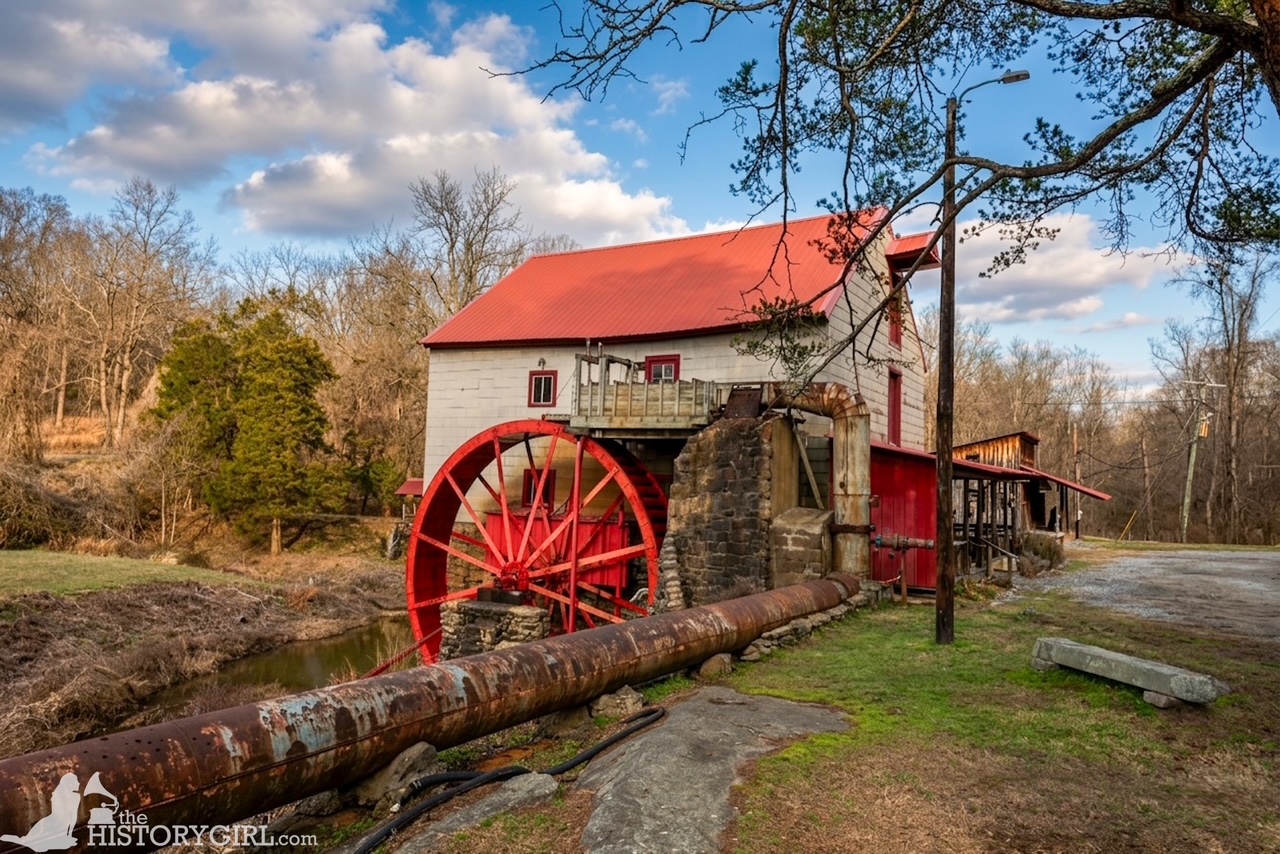
- The Wheel: While the waterwheel is iconic, it was actually replaced by a more efficient water turbine in 1903. The wheel you see today was installed in 1960 for the museum restoration.
The Mulligan Quarry
Looming directly behind the mill is a massive limestone cliff. This wasn’t just scenery; it was the Mulligan Quarry.
Opened in 1848 by Irish immigrants Frank and Pat Mulligan, the quarry mined dolomite limestone. The stone was crushed for roadbeds, burned in kilns to make fertilizer, or used for building foundations.
The Mulligan family was industrious. During the winter, when the quarry was quiet, they cut ice from the river to sell. When the railroad arrived in 1875, they imported coal to sell during the cold months. Today, the quarry office, screen house, dynamite shed, and tenant house still stand as part of the museum.
The Museum Village
In 1960, the Clinton Historical Museum (now the Red Mill Museum Village) acquired the site. Over the years, they moved other endangered historic structures to the grounds to create a complete picture of 19th-century life.
- Bunker Hill School House (1860): A classic one-room schoolhouse moved to the site in 1974. It served students until 1921 (and later served as a chicken coop before being rescued!).
- The Log Cabin (1976): This is a replica built for the Bicentennial. It is modeled after the childhood home of Revolutionary War General Daniel Morgan, who was born nearby.
If You Visit
The Red Mill is the centerpiece of Clinton’s historic district. You can walk across the iron bridge, explore the mill’s four floors of exhibits, and hike up to the quarry ridge.
- Location: 56 Main Street, Clinton, NJ 08809.
- Events: The museum is famous for its “Haunted Mill” event in October and the “Winter Village” holiday market in December.
- Don’t Miss: The view from the “Mulligan Quarry Bluff” looking down at the mill and the town—it provides a perspective most tourists miss.
For More Information
The Red Mill Museum Village (www.theredmill.org)
Leave a Reply