
The Time Capsule in the Woods: The Old Yellow Meeting House
Tucked away in the rolling farmland of Upper Freehold, New Jersey, there is a place where the 21st century feels very far away.
The Old Yellow Meeting House sits at the end of a long, curved driveway, separated from the modern world by a grove of trees and a silence that is hard to find these days. As the oldest existing Baptist church building in the state, it is more than just a structure; it is a time capsule, virtually unchanged since the mid-1700s.

Rising from the Ashes
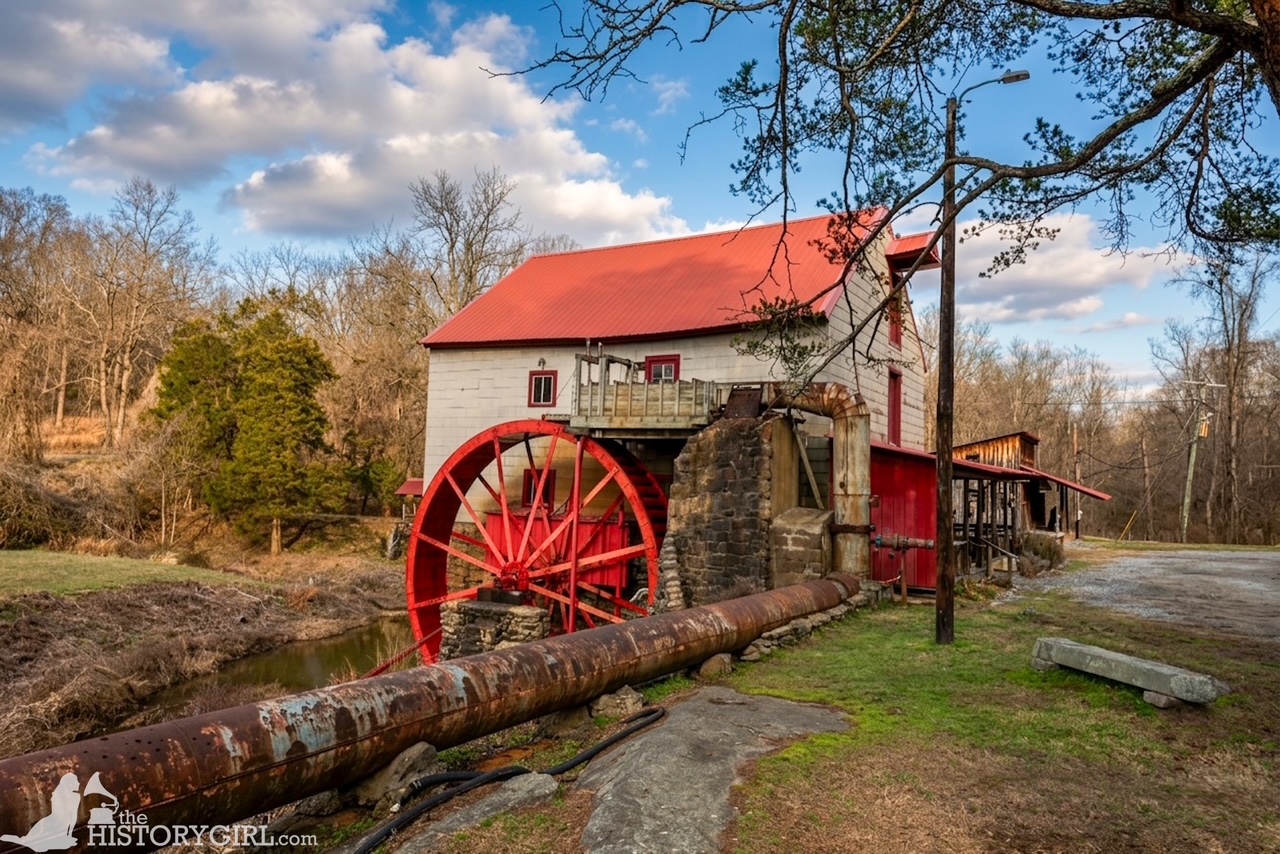
The story begins in 1720, when Thomas and Rachel Saltar (owners of a local mill and ironworks) deeded 25 acres to the early Baptist settlers of the area. The community initially converted an existing farmhouse into a place of worship.
However, disaster struck in the mid-1730s when a fire destroyed the makeshift church. Undeterred, the congregation rallied to build something permanent.
The current building, completed circa 1737, is a marvel of colonial practicality.
- The Orientation: The builders didn’t just place it randomly. The church is built on exact compass settings. The long side faces due south to maximize sunlight, providing natural heat and light in an era before electricity or furnaces.
- The Expansion: Originally three bays wide, a fourth bay was added later to accommodate a steep staircase leading to a deep balcony, allowing more congregants to pack inside.
The “Fighting Parson”
For decades, the church was served by traveling ministers. But in 1766, the congregation broke away from the Middletown Baptist Church to become independent. Their first settled minister, David Jones, would become a legend.
Serving from 1766 to 1775, Jones was known as the “Fighting Parson.” He didn’t just preach from the pulpit; he served as a chaplain in the Continental Army during the Revolutionary War. He became famous for his fiery sermon titled “Defensive War in a Just Cause – Sinless,” which rallied patriots to the fight for independence.
A Cemetery of Fieldstones
Walking the grounds is a somber history lesson. The cemetery in front of the church contains the remains of the area’s earliest settlers.
- The Oldest Stones: The oldest dated markers belong to John Saltar (died 1723) and his father-in-law Elisha Lawrence (died 1724).
- The Unknown: Many graves are marked only by rough fieldstones with no inscriptions. These likely belong to early settlers or the poor who could not afford carved headstones, yet they rest alongside the wealthy landowners.
Saved by Abandonment
In 1855, the congregation outgrew the old meeting house and moved to a new church in the nearby village of Imlaystown.
Paradoxically, this abandonment is what saved the Old Yellow Meeting House. Because it was no longer in regular use, it was never “modernized.”
- No Plumbing: The building still lacks indoor plumbing.
- No Modern Heat: Aside from a few electric lights wired to the outer walls, the building remains devoid of modern technology.
Peering through the hand-blown glass windows today, you see essentially the same view a parishioner would have seen in 1740.
The Site Today
In 1975, the Friends of the Old Yellow Meeting House was formed to preserve the site. They have since restored the 1740 Parsonage (which sits nearby) and ensured the church remains standing for future generations.
While usually quiet, the church comes alive once a year. On the last Sunday in July, the descendants of the original families and local residents gather for an annual reunion service, filling the wooden pews with song just as they did 280 years ago.
If You Visit
- Location: 70 Yellow Meeting House Road, Cream Ridge, NJ 08514.
- Access: The grounds and cemetery are open to the public during daylight hours. The interior of the church is generally closed except for special events.
- Best Time to Go: The site participates in Monmouth County’s “Weekend in Old Monmouth” (usually in May), during which the doors are open for tours.
For More Information
- The Friends of the Old Yellow Meeting House (www.oldyellowmeetinghouse.org)

Leave a Reply