
The SS United States crossed the Atlantic in 3 days, 10 hours, and 40 minutes on its maiden voyage in 1952. On November 11, 2026, the same ship took hours to disappear beneath the water off Florida’s Panhandle. Crews deliberately sank it to create an artificial reef.

The liner that beat the Queen Mary
The United States left New York on July 3, 1952. On its eastbound crossing, it cut about ten hours off the time set by the Queen Mary and took the Blue Riband, the distinction awarded to the fastest transatlantic passenger liner.
Designed by naval architect William Francis Gibbs and built in Newport News, Virginia, the ship had a second purpose. It could be converted to carry troops in wartime. In peacetime it carried passengers across the Atlantic until 1969, as commercial air travel was drawing passengers away from ocean liners.
From Philadelphia to the Gulf
After retirement, the liner spent decades moored in Philadelphia. Florida’s Okaloosa County bought it in 2024. In 2025, it was towed to Mobile, Alabama, where crews prepared it for reefing. Workers removed the funnels before the sinking, and the SS United States Conservancy plans to display them and other pieces in a museum on land.
The final tow took the ship into the Gulf of Mexico, off the coast of the Florida Panhandle. Crews let water into the hull in a controlled sinking. The ship stayed visible well after dark before it slipped below the surface. The county intends for the wreck to provide habitat for marine life and become a destination for divers.
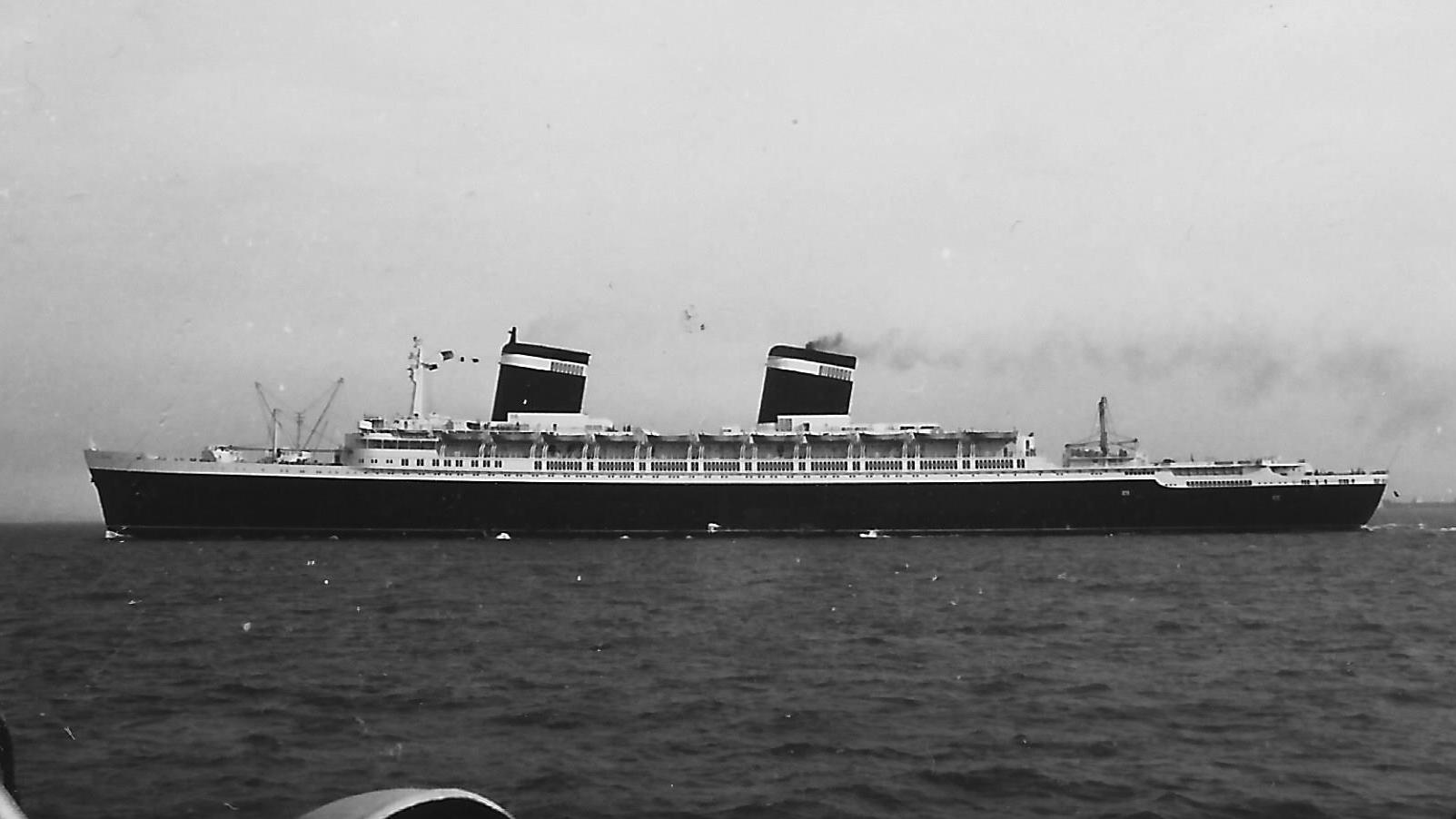
The 1952 photo shows the liner underway with both funnels in place. Those funnels are among the pieces that will help tell its story ashore, while the rest of the ship begins a new chapter on the seafloor.
Sources
SS United States Conservancy on the speed record · Conservancy reef and museum update · USNI News on the ship’s design and final tow · Associated Press coverage of the sinking
If you enjoy stories like this, you can buy me a coffee to support more research for The History Girl.


Leave a Reply